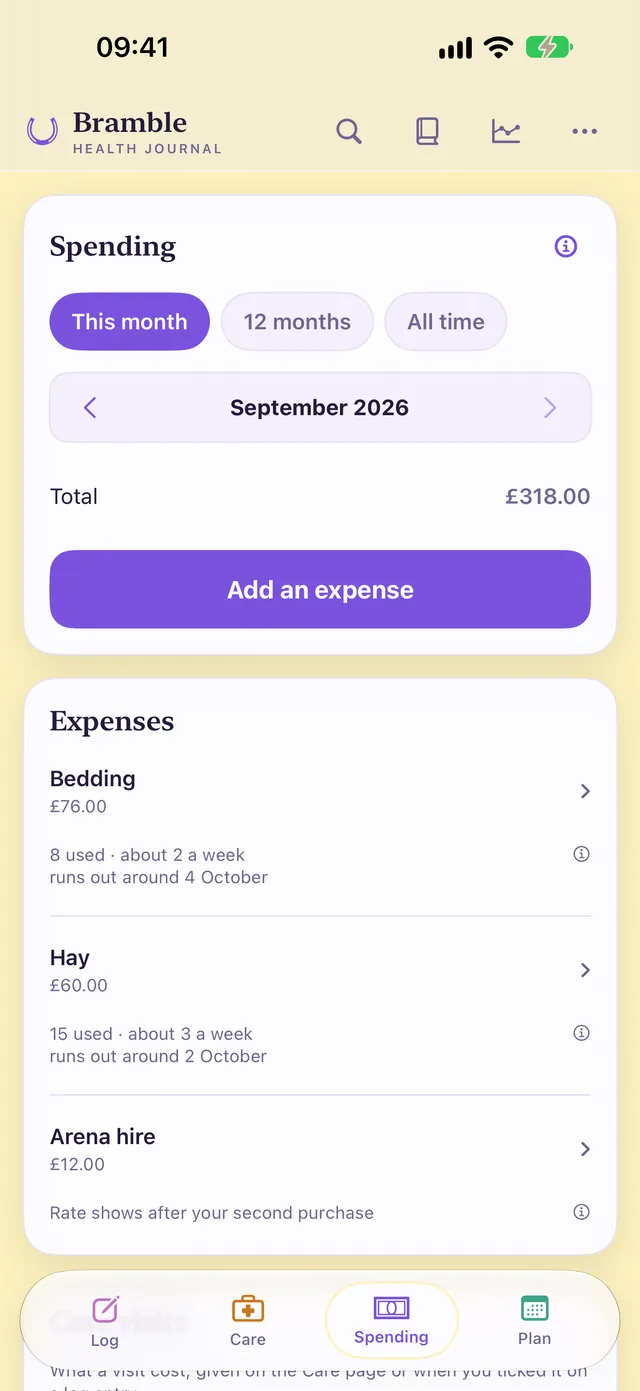
Livery, hay, bedding, feed and the people who came out. Spending brings the costs you logged together, by horse and by period.
The spending record
Everyday purchases and the visits
Keeping a horse involves small regular costs and larger ones that arrive less
often. A delivery of hay, more bedding, feed, livery and a visit can all land in the
same month. A spending record gives those amounts somewhere to sit together.
HorseDex has a Spending page for what each horse costs. Log the purchases you want
to keep, with their dates and amounts, then look back at the recorded costs over a
period. Livery, hay, bedding and feed sit alongside the visits you have paid for.
A visit cost entered on the Care page is counted on Spending too. You can record
the farrier's visit where its date belongs and still have its cost in the spending
total. The figures come from what you entered, so a cost you have not logged will not
appear in the total.
The period's spending, with the stock figures underneath.
Horse and period
Read the costs over the dates that suit you
Spending shows totals for the period you choose, with the costs divided by category.
If you keep more than one horse, the page also brings together each horse's total.
A horse's purchases and visits stay part of that horse's spending record.
The month can start on your payday rather than the first. That lets the period
follow the way you organise your own money. You can move between months to read what
you logged in earlier periods, rather than keeping only the current month's figure.
The total is a way to read a set of recorded amounts. It gives you the numbers
you wrote down for the dates you selected, without filling in missing purchases or
turning an unrecorded cost into an assumed one.
Hay, bedding and feed
Roughly how long the logged stock lasts
For stock purchases, Spending can show roughly when an item will run out. The
estimate needs at least two purchases with quantities logged. It uses that item's
purchase history for the horse, treating the quantities bought before the latest purchase
as used between the first and latest dates. That gives an average weekly figure, then
a rough end date for the latest quantity. It does not measure stock in your feed room.
The workings are a tap away. You can read which purchases counted, the quantity
and the number of days behind the figure. Where the record is too short to support a
rate, there is no run-out date to display.
Stockpiling, a change in how much you use, a purchase not entered or a different pack size
changes how useful that estimate is. Treat it as a rough figure from the logged
history, and check what is actually left before arranging the next delivery.
A record to return to
The numbers behind an ordinary month
The useful part is having the amounts and dates together when you want to read them.
You can look back at a month's livery and supplies, or read a visit cost alongside
the other things you paid for that horse.
Spending keeps the money record beside the care register and the health journal.
Each page shows a different part of what you entered: the costs, the visits and the
days themselves.