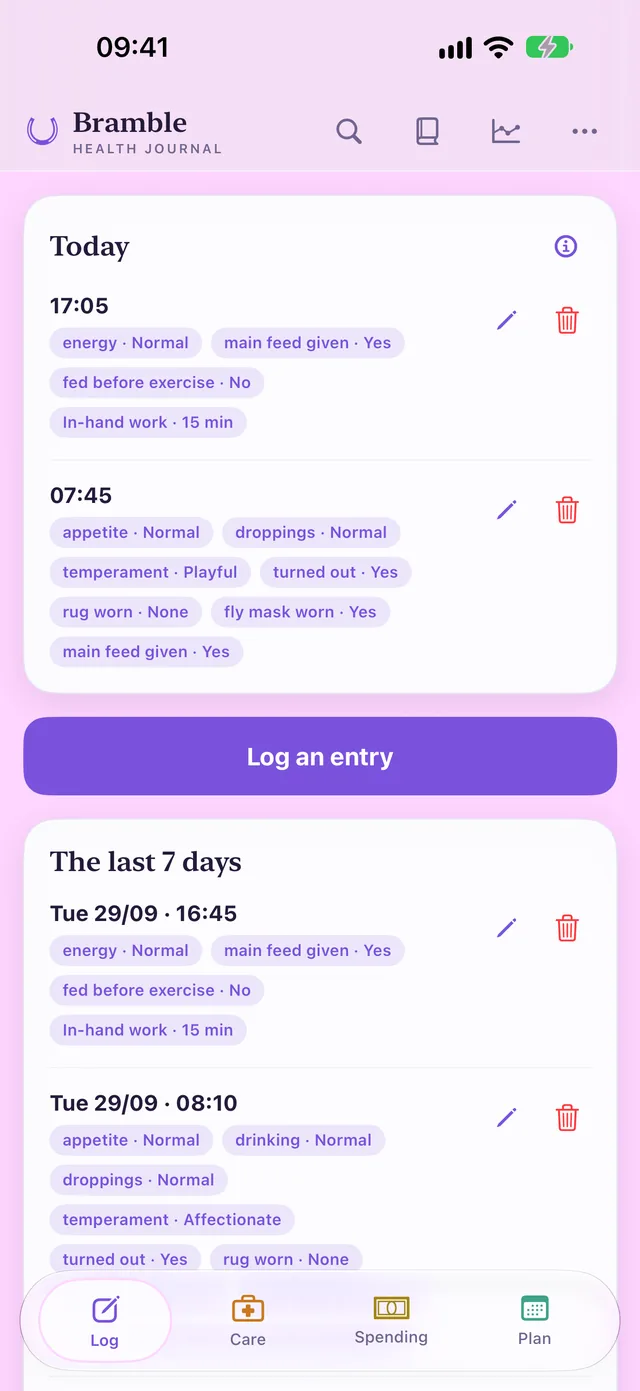
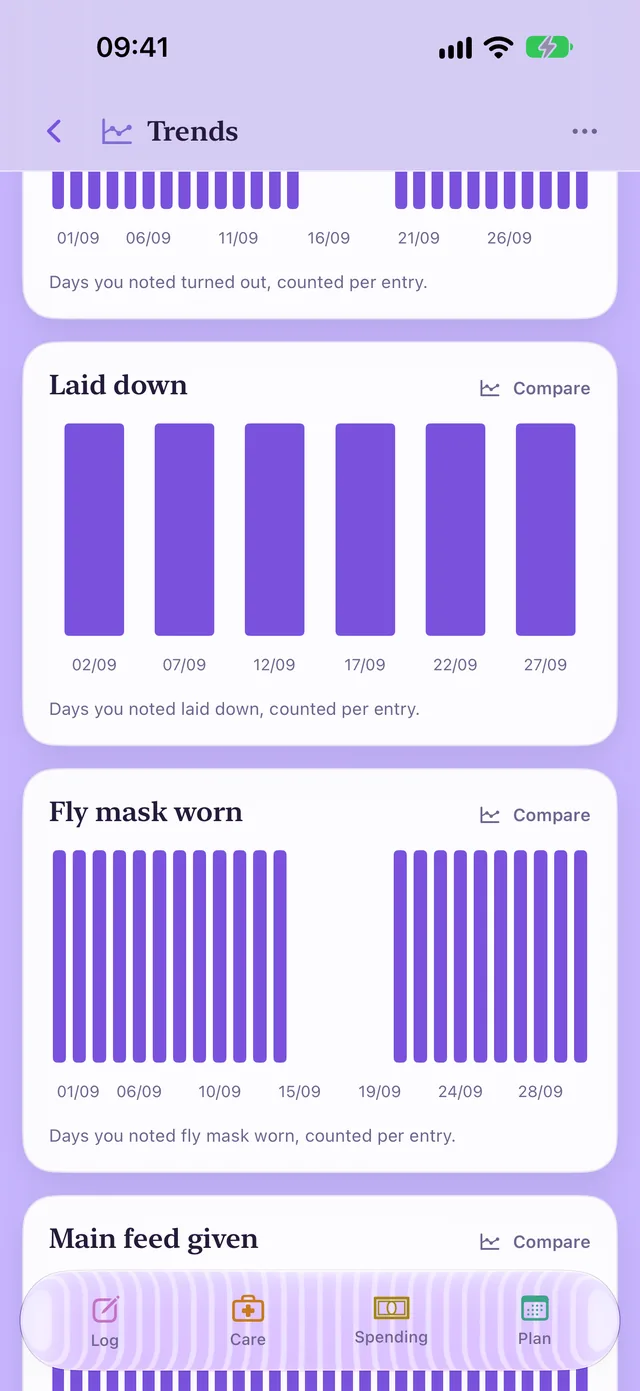
What happened, what you saw and when you wrote it. HorseDex keeps a dated health journal and shows your records back over time.
The daily journal
An entry for what you saw
A horse's health record is made of ordinary days as well as the ones you remember.
What they ate, how they were in themselves, whether they worked and what you measured.
Writing it down gives each observation a date, rather than leaving you to remember which
morning it belonged to.
In HorseDex, Log opens on today and the last seven days. You can record exercise and
general observations, then switch on the other fields you want. Appetite, drinking,
droppings, urination, energy and behaviour use a plain scale: normal, increased, reduced
or none. Nothing is compulsory. You decide what belongs in your horse's journal.
An entry is your account of that day. If you have more than one horse, each has its own
record and settings, so one horse's notes stay with that horse.
Readings and history
Your numbers, on the dates you entered
Weight and other readings can be entered when you take them. The history keeps the
measurements in order, and Trends draws your entered readings against their dates. The
line is made from your numbers. Only the readings you entered appear as recorded points.
Notes, measurements and exercise totals sit side by side over time. You can arrange
the Trends cards or switch them off. Looking back through a period means reading what you
actually logged, rather than trying to put a month of mornings back together from memory.
Log keeps the day's entries together.Trends shows the record over time.
Episodes
One thread for an illness or injury
An episode holds an illness or injury together: when it started, the updates you
added as it went on and an end date when there is one. Photographs and video can belong
to that thread. More than one episode can run at the same time.
Medication records hold the name, dose and frequency as written on the label, the
start and end, the reason, instructions and a photograph of the label. Facts your vet has
already told you can be recorded against the horse. They are there because you entered
them, without a conclusion added by HorseDex.
The vet report
Take the record to the visit
Choose a range of dates and make a vet report as a PDF. It brings the recorded
entries, readings, care events and episode and medication changes into a document you
can email before a visit. The dates and notes give the conversation a written starting point.
HorseDex records and displays what you entered. Your vet reads the history and
decides what it means. The journal gives you somewhere to keep the information they ask
you to record, and somewhere to return to when they ask about an earlier day.